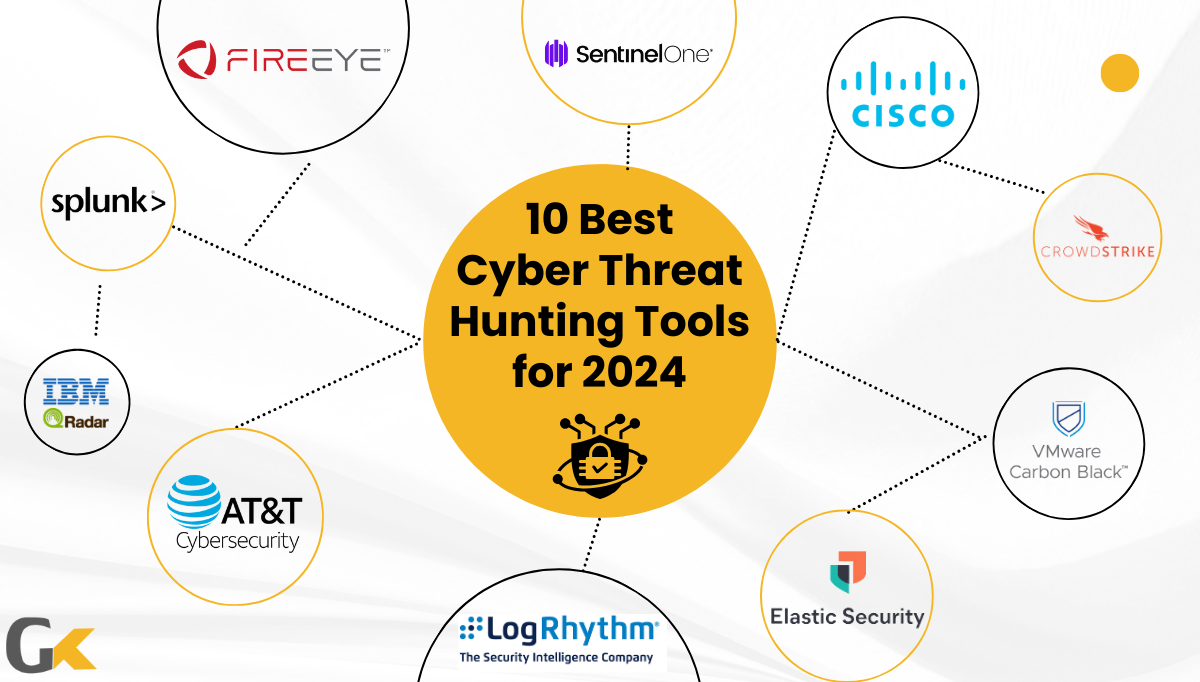

What Is Cyber Threat Hunting And Why Does It Matter in 2026?
Traditional security tools wait for alerts. Cyber threat hunting flips that model, trained analysts and intelligent software actively search for hidden attackers inside your network before they cause damage.
According to IBM’s 2024 Cost of a Data Breach Report, the average attacker spends 197 days inside a network before being detected. For Canadian SMBs, that dwell time costs an average of $6.32 million per breach. Threat hunting closes that gap by proactively searching for indicators of compromise (IOCs), suspicious lateral movement, and anomalous behaviour — before ransomware deploys or data leaves your environment.
In this guide, we review the 10 best cyber threat hunting tools available in 2026, covering what each does, who it’s built for, and how Canadian IT teams are using them right now.
What to Look for in a Cyber Threat Hunting Tool
Before diving into the list, here are the key capabilities that separate elite threat hunting platforms from basic security tools:
- Behavioural analytics: Detects anomalies in user and entity behaviour (UEBA), not just known signatures
- Threat intelligence integration: Pulls from global feeds like MITRE ATT&CK, VirusTotal, and Shodan
- Endpoint visibility: Deep telemetry from every device on your network
- Log aggregation: Centralised collection of firewall, cloud, identity, and application logs
- Automated hunting playbooks: Repeatable workflows so analysts don’t start from scratch every hunt
- Scalability: Handles enterprise data volumes without performance degradation
- Canadian data residency: Critical for PIPEDA and provincial privacy compliance
The 10 Best Cyber Threat Hunting Tools in 2026
1. CrowdStrike Falcon – Best Overall for Endpoint Threat Hunting
Best for: Mid-market and enterprise organisations needing elite EDR + threat hunting in one platform
CrowdStrike Falcon is widely regarded as the gold standard in endpoint detection and response (EDR). Its Falcon OverWatch service provides 24/7 managed threat hunting by CrowdStrike’s elite team, monitoring over 230 adversary groups globally.
- Real-time endpoint telemetry across Windows, macOS, Linux, and cloud workloads
- AI-powered threat graph with 1 trillion+ security events processed weekly
- MITRE ATT&CK framework mapping built into every alert
- 1-second visibility gap — the fastest in the industry
- Canadian data centre availability for compliance requirements
Pricing: Starting at ~$15–$25 USD/endpoint/month depending on tier
GoGeekz Verdict: If you can only choose one tool, Falcon is the benchmark. Its OverWatch managed hunting service is worth the premium for organisations without in-house SOC capacity.
2. Microsoft Defender for Endpoint – Best for Microsoft 365 Environments
Best for: Businesses already running Microsoft 365 Business Premium or E5 licences
If your organisation runs Microsoft 365, Defender for Endpoint Plan 2 is already partially available in your licence. Its Advanced Hunting feature uses KQL (Kusto Query Language) to run custom queries across 30 days of raw telemetry data.
- Deep integration with Azure AD, Intune, Sentinel, and the entire M365 stack
- Automated investigation and remediation (AIR) reduces analyst workload by 80%
- Threat analytics dashboard tracks active campaigns targeting your industry
- Attack surface reduction (ASR) rules block common attack vectors proactively
- Native integration with Microsoft Sentinel for SIEM correlation
Pricing: Included in M365 Business Premium (~$26 CAD/user/month) or E5 ($65 CAD/user/month)
GoGeekz Verdict: Exceptional value if you’re already in the Microsoft ecosystem. Most Toronto SMBs already have access to this and don’t use it — a massive missed opportunity.
3. Splunk Enterprise Security — Best for Large-Scale SIEM + Hunting
Best for: Enterprise security teams with dedicated SOC analysts and large data environments
Splunk remains the most powerful SIEM on the market for organisations with complex, high-volume environments. Its threat hunting workflows allow analysts to pivot across billions of events in seconds using SPL (Search Processing Language).
- Ingests data from 350+ pre-built integrations across cloud, on-prem, and hybrid
- MITRE ATT&CK heat maps show coverage gaps across your detection framework
- Mission Control dashboard for unified hunt management
- Risk-Based Alerting (RBA) dramatically reduces alert fatigue
- Phantom SOAR integration for automated response playbooks
Pricing: Starting at ~$150 USD/GB/day – enterprise pricing, not for SMBs
GoGeekz Verdict: The most capable platform available but requires dedicated expertise to operate. Best suited for organisations with 500+ employees and in-house security teams.
4. Elastic Security – Best Open-Source Option for Threat Hunting
Best for: Technical teams who want enterprise-grade hunting capabilities at lower cost
Elastic Security (formerly ELK Stack) is the leading open-source security analytics platform. With Elastic’s prebuilt detection rules aligned to MITRE ATT&CK and its powerful query language (EQL), security teams can build sophisticated hunting workflows without enterprise licensing costs.
- 800+ prebuilt detection rules mapped to MITRE ATT&CK techniques
- Event Query Language (EQL) for fast, precise threat hunting queries
- Machine learning anomaly detection built into the platform
- Universal profiling for deep infrastructure visibility
- Cloud-native deployment on AWS, Azure, GCP, or self-hosted
Pricing: Free (self-managed) to ~$95 USD/month for Elastic Cloud
GoGeekz Verdict: Exceptional for technically capable teams. Requires more setup than commercial tools but delivers enterprise-level hunting at a fraction of the cost.
5. SentinelOne Singularity — Best for Autonomous Threat Hunting
Best for: Organisations wanting AI-driven autonomous detection and response without heavy analyst involvement
SentinelOne’s Singularity platform uses AI to autonomously detect, hunt, and respond to threats in real time — even without an internet connection. Its Storyline technology automatically contextualises every event into a visual attack story, dramatically reducing the time analysts spend piecing together incidents.
- Autonomous response — kills, quarantines, and rolls back malicious changes in milliseconds
- Storyline Active Response (STAR) creates custom detection and response rules
- WatchTower threat hunting service provides expert-led proactive hunts
- Purple AI — conversational AI for natural language threat hunting queries
- Full attack surface coverage: endpoint, cloud, identity, and network
Pricing: Starting at ~$10 USD/endpoint/month for Core; Enterprise tier for full hunting features
GoGeekz Verdict: Best autonomous hunting platform available. Ideal for lean IT teams who need maximum protection with minimal manual oversight.
6. Vectra AI — Best for Network Detection and Response (NDR)
Best for: Organisations focused on detecting lateral movement and attacker behaviour inside the network
Vectra AI specialises in network detection and response (NDR) — hunting for attackers already inside your environment by analysing network traffic rather than relying on endpoint agents. Its Attack Signal Intelligence correlates behaviours across hybrid environments to surface the highest-priority threats.
- Analyses metadata from network traffic, cloud logs, M365, and identity systems
- Urgency scoring prioritises the 1–3 most critical threats — not thousands of alerts
- Covers AWS, Azure, GCP, and on-premises environments simultaneously
- Detects command-and-control (C2), lateral movement, and data exfiltration
- Integrates with CrowdStrike, Splunk, Microsoft Sentinel for unified hunting
Pricing: Custom pricing – contact Vectra for a quote
GoGeekz Verdict: Best-in-class for network-based hunting. Particularly valuable for detecting sophisticated attackers who evade endpoint detection by living off the land.
7. Cybereason — Best for Attack Correlation and MalOp Detection
Best for: SOC teams who need to understand the full scope of an attack, not just individual alerts
Cybereason’sLS