

Introduction: Data Is Your Most Valuable Asset — But It’s Always at Risk
In today’s digital-first world, data is the lifeblood of every business, especially for SMBs relying on cloud systems, remote work, and third-party integrations. But with this increasing dependency comes a growing number of threats — from ransomware attacks and hardware failures to natural disasters and insider threats.
Fact: According to the Ponemon Institute, 60% of SMBs that lose data due to a disaster or breach go out of business within 6 months.
If 2024 taught us anything, it’s that traditional backup methods are no longer enough. The future of data protection lies in smart, scalable, and automated strategies — and businesses that don’t adapt may be left vulnerable.
In this blog, we’ll explore the top trends shaping the future of data backup and disaster recovery (DR) — and how SMBs like yours can prepare for tomorrow’s challenges, today.
Why Rethink Backup & DR in 2025?
The backup landscape is evolving rapidly due to:
- More cloud-native environments
- Rise of remote/hybrid work
- Increase in ransomware-as-a-service (RaaS)
- Compliance regulations like PIPEDA, GDPR, HIPAA
- New cyberattack vectors (e.g., AI-generated malware)
This means businesses must move from simply saving data to building resilience into their operations.
Top 7 Future Trends in Backup & Disaster Recovery
1.Ransomware-Resistant Backup Is No Longer Optional
Ransomware is now the #1 cause of data loss worldwide — and attackers have evolved to target backup systems first to eliminate recovery options.
Use Case: A logistics firm in Vancouver suffered a ransomware attack in late 2024. Their backups were stored on the same network and were encrypted by the attacker. With no air-gapped solution in place, they paid a $70,000 ransom just to regain access.
2025 Best Practices:
- Use immutable backups that can’t be altered or deleted
- Store backups in air-gapped or off-site environments
- Leverage ransomware detection in your backup solution
- Enable versioning so you can roll back to clean states🧠 Pro Tip: Choose solutions like Veeam, Acronis, or GoGeekz Backup Suite with built-in ransomware protection.
2. Backup-as-a-Service (BaaS) Gains Traction
Cloud-based Backup-as-a-Service (BaaS) is becoming the go-to solution for SMBs. It offers automated, scalable backup without the hassle of maintaining hardware or manually checking logs.
Benefits of BaaS:
| Feature | Benefit |
| Fully managed | Reduces IT burden |
| Pay-as-you-grow | Ideal for scaling businesses |
| Off-site by default | Protects against physical loss |
| Remote monitoring | Easy to audit and track |
Industry Fact: Gartner predicts that 50% of organizations will abandon traditional backup tools for BaaS by 2026.
3. AI-Powered Disaster Recovery Orchestration
Manual recovery processes are slow, complex, and error-prone. AI is now being used to:
- Predict risks before failures occur
- Automatically trigger failovers
- Optimize recovery point objectives (RPO) and recovery time objectives (RTO)
Example: A fintech startup in Toronto uses AI-based orchestration to automatically replicate critical workloads to AWS when anomalies are detected on Azure.
Pro Tip: Look for DR solutions with predictive analytics, self-healing scripts, and multi-cloud orchestration.
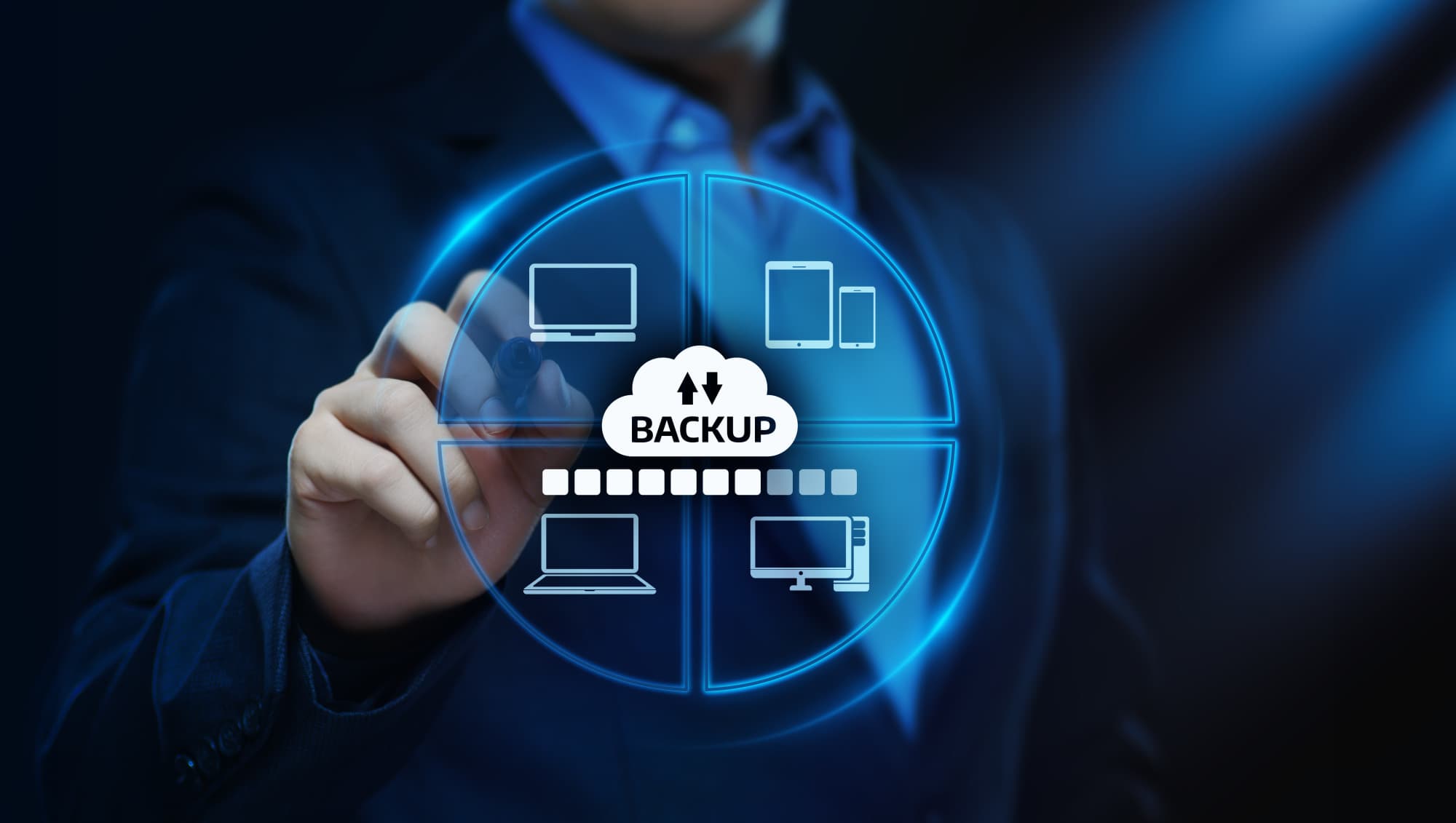
4. Granular, Application-Level Backups
Old-school backups were full-system images. Now, SMBs need the ability to recover specific apps, databases, or even emails without restoring the whole machine.
Popular Application-Level Backup Targets:
- Microsoft 365 (Exchange, SharePoint, OneDrive, Teams)
- Google Workspace
- QuickBooks or accounting software
- CRMs like Salesforce or HubSpot
- E-commerce platforms like Shopify or WooCommerce
Tip: Don’t assume SaaS apps back themselves up — Microsoft 365 and Google Workspace do not guarantee full data recovery.
5. Compliance-Driven Backup Strategies
Governments are tightening data protection laws. In 2025, compliance isn’t just about having backups — it’s about how long you retain data, how securely you store it, and how fast you can recover it.
Key Frameworks to Watch:
- PIPEDA (Canada)
- GDPR (EU)
- HIPAA (Healthcare)
- SOC 2, ISO 27001, NIST for U.S.-based orgs
Tip: Ensure your backup vendor provides audit trails, data residency control, and encryption in-transit and at rest.

6. Hybrid & Multi-Cloud Backup Strategies
No single platform can offer 100% uptime or protection. That’s why smart SMBs are using hybrid cloud and multi-cloud environments to build redundancy.
Benefits:
- Avoid vendor lock-in
- Maintain control with on-prem storage + cloud failover
- Optimize cost and performance with workload-specific cloud selection
Example: A marketing agency runs daily operational workloads in Google Cloud but replicates weekly backups to AWS Glacier for long-term storage.
7. Testing DR Plans Is Becoming Automated & Mandatory
Having a DR plan is not enough — it must be tested, validated, and documented regularly. In 2025, DR testing can be fully automated, reducing manual effort and increasing confidence in your recovery capabilities.
Best Practices:
- Simulate ransomware attacks or hardware failures
- Test failovers at least quarterly
- Validate both RTOs and RPOs against real-time metrics
- Train non-IT staff on their DR roles
Real-World Data: According to IDC, only 23% of SMBs test their disaster recovery plans more than once a year — and those that don’t are 3x more likely to suffer from extended downtime.
Also Read : Top Emerging Cyber Threats to Watch Out
Common Mistakes to Avoid
| Mistake | Why It’s Risky |
| Relying on local-only backups | Can be lost in fire, flood, or ransomware |
| Not automating backups | Leads to outdated or incomplete recovery points |
| Assuming SaaS tools backup everything | They don’t — especially email, chat, and deleted files |
| Not testing restores | You won’t know if your backups are usable |
| No documentation or ownership | Delays recovery and increases panic |
Tips & Tricks to Future-Proof Your Backup Strategy
- Use 3-2-1 Rule: 3 copies of data, 2 different mediums, 1 off-site
- Create asset inventory mapping to know what needs protection
- Set backup alerts and monitor them with automated tools
- Use role-based access control for backup admins
- Schedule automatic monthly test restores
Metrics to Monitor for Backup & DR
| Metric | Purpose |
| RPO (Recovery Point Objective) | How much data loss is acceptable |
| RTO (Recovery Time Objective) | How fast can systems be restored |
| Backup Success Rate | Measures backup reliability |
| Restore Testing Pass Rate | Validates backup usability |
| Storage Costs | Helps optimize across clouds |
Conclusion
In the future, data will be more valuable — and more vulnerable — than ever. The question isn’t whether a disaster will strike, but when.
Whether it’s ransomware, a cloud outage, or human error, the only businesses that survive are those that plan, test, and evolve their backup and recovery strategies regularly.
At GoGeekz, we help SMBs like yours:
- Set up air-gapped, cloud, or hybrid backups
- Test disaster recovery plans
- Monitor everything with real-time alerts
- Stay compliant and resilient
Ready to future-proof your data?
Book Your FREE Backup & Disaster Recovery Audit Today
FAQs
No. You need redundancy — local + cloud or multi-cloud + off-site replication.
At least quarterly. Some industries (like finance) require monthly simulations.
Not fully. Microsoft maintains availability, not backups. You need a third-party solution.
Complacency — assuming backups are working without monitoring or testing them.
We offer fully managed backup, DR testing, compliance reporting, and ransomware-protected storage for SMBs.
Contact Us For Your Enquiries
Modern backup and disaster recovery strategies require expert planning—IT consulting services can help Toronto businesses implement solutions that align with 2025 best practices.
Modern disaster recovery strategies should incorporate advanced threat detection and hunting capabilities to ensure that backup systems are free from malware and hidden threats before recovery.
Backup and disaster recovery strategies are most effective when integrated into a broader managed IT services plan that ensures consistent implementation and monitoring.